
Walmart Medical Alert Systems: A Buyers Guide


SUMMARY
If you’ve done your research through manufacturer websites, you could buy a medical alert system through Walmart, which may be convenient. But be sure to do that research beforehand, because the variety of features available makes it important to select the best fit for your situation. These systems generally fall into two categories: monitored devices with 24/7 emergency response and ongoing monthly fees, and unmonitored options that function more like emergency communication tools without subscription costs. Walmart provides a selection of both types, as listed below, but be sure to distinguish between full-service systems and the standalone, more limited devices. Compare features such as fall detection, GPS tracking, and response capabilities, and weigh those against the purchase costs and subscription costs. Ultimately, while retail availability makes a medical alert system easily available, choosing the right system depends on matching the protection, reliability, and support for you – and that’s best done with comprehensive online research up front.
# # #
Medical alert system providers invite potential customers to purchase through their websites, but you may not be aware that these devices are also available at your local Walmart. With the wide availability of Walmart stores nationwide, it’s easy to walk into a store, browse the selection, and purchase a system to use on the same day.
Before making the trip to Walmart in search of a medical alert system, consider what you are looking for ahead of time. Walmart offers two different kinds of medical alert systems: monitored, which have 24/7 access to emergency operators for a monthly fee, and unmonitored, which are systems that serve as personal communication devices with no monthly fee.
Keep in mind that research has shown every one dollar spent on a medical alert system results in $7.19 in healthcare savings! Research also suggests that alert systems reduce mortality (death) rates by nearly four times and reduce hospital use by 59%.
Let’s take a look at the pros and cons of each kind of system to see which one will work best for you.
Monitored Systems
Monitored medical alert systems are traditional systems that come with a monthly fee and emergency buttons that connect a user to an operator who is available 24/7. These devices may be home-based or mobile, but typically include a lightweight waterproof wristband or pendant with two-way communication. The following monitored medical alert systems are sold through Walmart’s website (you can also check out our article on searching Walmart’s website for the best alert system):
- Medical Guardian
- Thriive
- Lively Mobile
- LogicMark
- Mobi Connect
- WellBe
All of these options are monitored systems.
These systems are available directly through Walmart, and you can search their site online, but you can also buy any of the systems online if you’d rather buy directly through the medical alert system provider. Don’t forget that monitored systems have a monthly fee attached to them, while unmonitored systems usually have a one-time fee upfront.
Medical Guardian
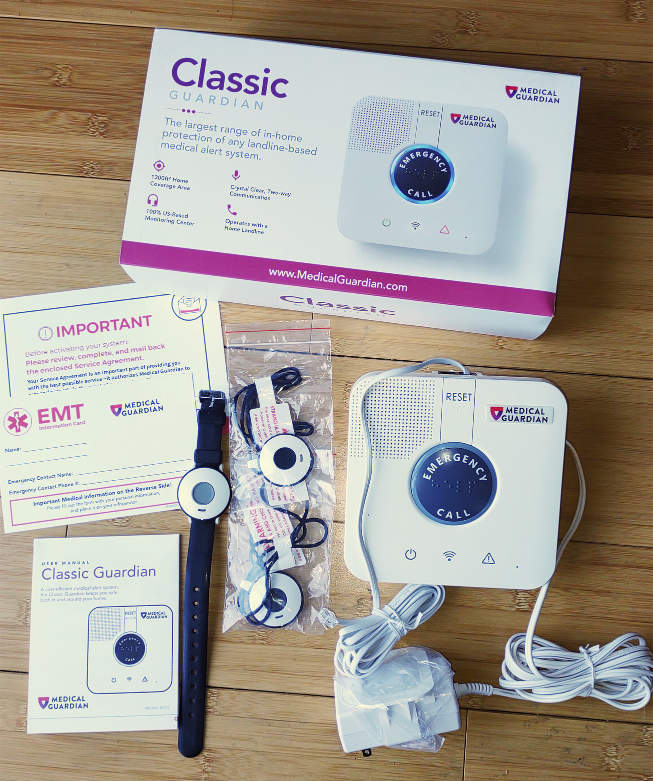
Medical Guardian has been a medical alert system provider for more than 25 years. They offer feature-packed home and mobile devices and a smartwatch that includes the functions of a medical alert device. Features include medication reminders, integrated GPS, automatic fall detection, and mobile app connectivity.
Devices with integrated GPS are on-the-go devices popular for their ability to lower the the risk of wandering and injury in adults with memory problems, Alzheimer’s Disease, and dementia.
The Home Guardian home-based unit is available at Walmart for $64.95. The unit uses cellular technology and does not require a landline telephone connection. Other units may be found at Walmart depending on availability.
Depending on the device and features, the company’s monthly plans range from $39.97 up to $139.77, which are industry-comparable. Quarterly, semi-annual, and annual payment plans are eligible for discounts.
Unmonitored Systems
For users who don’t need ongoing monitoring by trained operators or 24/7 access to emergency services and those who can’t afford the monthly cost, an unmonitored system is a subscription-free option for accessing emergency communication. Unmonitored systems feature two-way communication options. Depending on user commands, the device would connect to a loved one or 911 rather than a call center.
One major drawback of unmonitored systems is that most do not offer fall detection technology. V.ALRT Wireless Personal Emergency Alert Device is one such device that offers automatic fall detection, but the device is dependent on a connected smartphone using Bluetooth. Other devices like the Future Call 2-Way Talking SOS Pendant Phone offer automatic fall detection without smartphone dependency, but the unit costs $195.
Making the Purchase
For the best affordability with the most features from a reputable company, and with the variety of options available today, research before you buy is always recommended.
Not all medical alert systems or providers are the same. So, it’s important to make the comparisons ahead of time and to determine what is the best choice for you. For a look at the best medical alert systems for 2026, check out the Medical Alert Buyers Guide online.